When planning a trip, travelers often start by browsing destination listing pages to explore the places they might want to visit. These pages help users compare locations and narrow down their options before deciding where to go, and they frequently act as entry points from organic search.
The Case Study
For one customer in the travel industry, organic traffic was concentrated around a handful of high-interest destination listing pages. As internal links help search engines understand relationships between pages and can influence how link equity is distributed across a site, we wanted to see whether surfacing links to these popular destination listings pages more prominently could improve their organic performance.
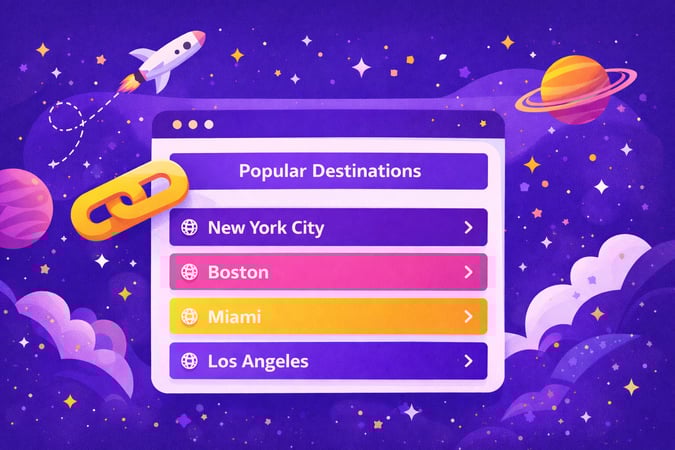
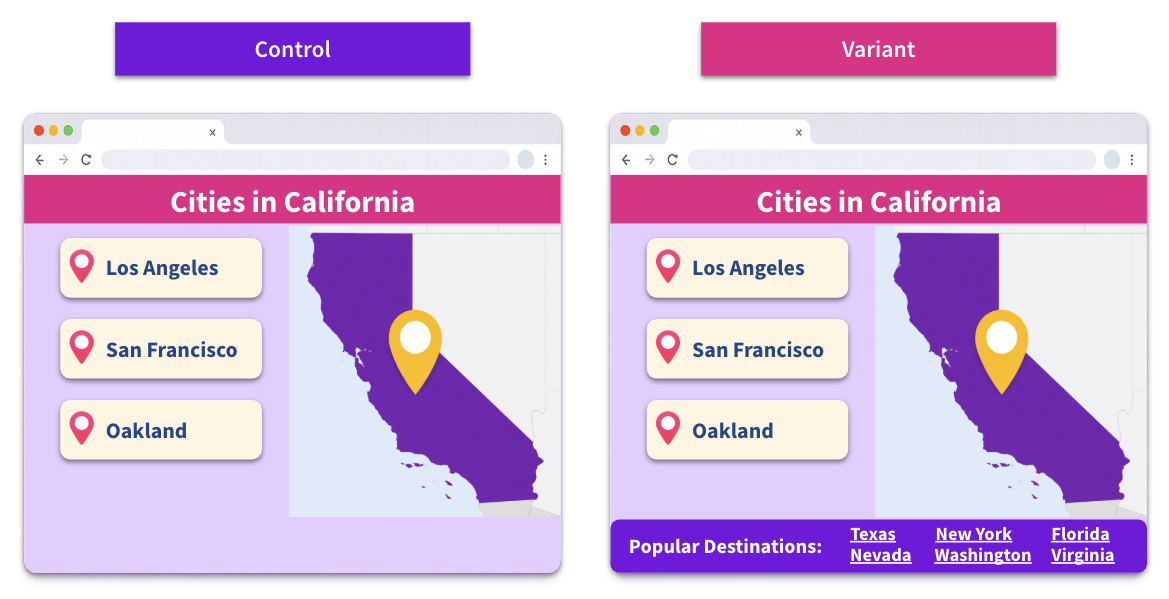
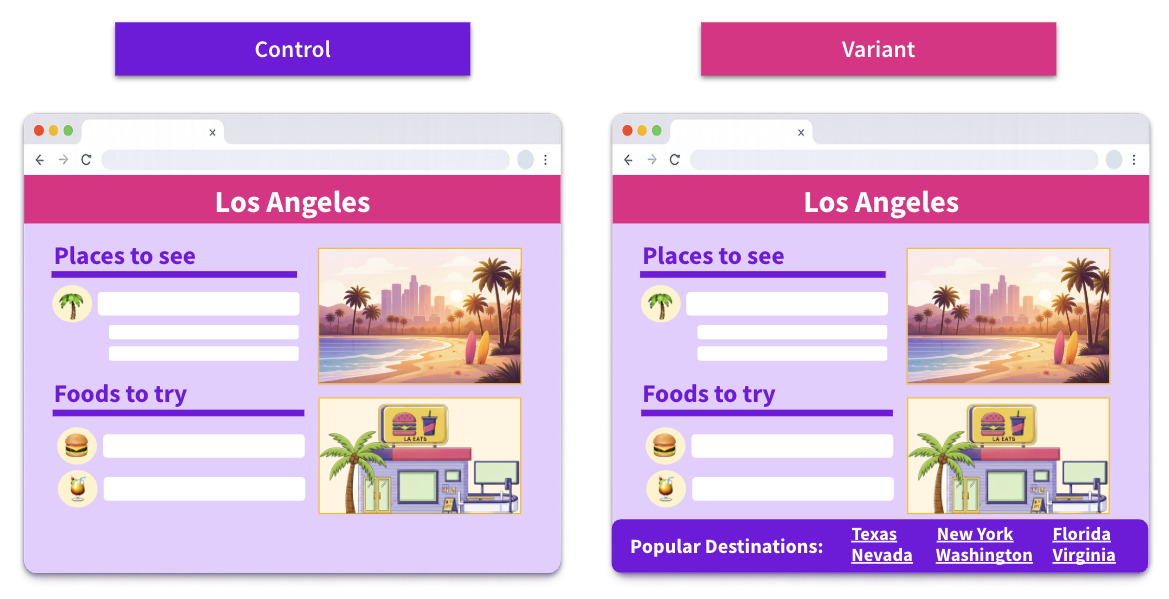
To test this, we introduced a static link block highlighting the top 30 destination listing pages. In the first test, these links were added to other destination listing pages across the site. In the second test, the same link block was introduced on location pages to see whether placing the links in a different page context would influence user behavior or organic performance.
** In this case study, destination listing pages refer to pages that surface multiple locations within a region, while location pages focus on a specific place.
What Was Changed
In the first test, we added a static link block to other destination listing pages across the site, linking to the top 30 destination listing pages.
Results
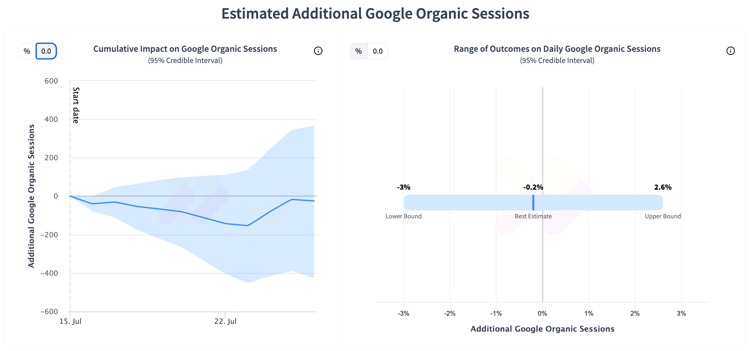
The link block on other destination listing pages didn’t lead to a noticeable change in organic traffic. Even though the top destination listing pages were clearly surfaced, they didn’t see meaningful additional visits during the test period.
This may mean that simply introducing these links on other destination listing pages wasn’t enough to change how users interacted with them. Because of this, we explored whether page context might play a role.
Using the same top 30 destination listing link block, this time it was added to location pages across the site.
Location pages focus on a specific place and often receive strong visibility and traffic from search. By introducing the same links in this context, we wanted to see whether surfacing popular destination listing pages from these higher-traffic pages would influence organic performance.
Results
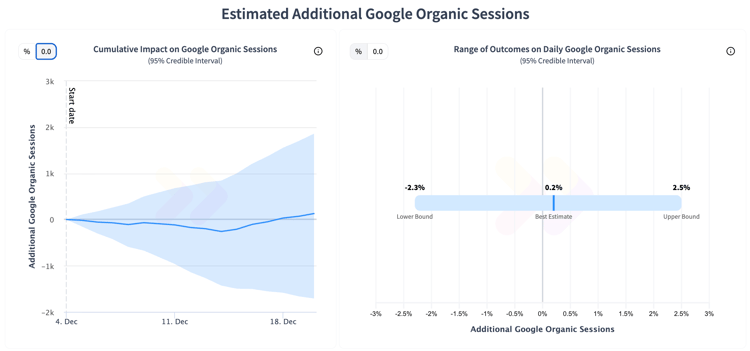
The second test produced a similar outcome. Adding the same link block to location pages did not lead to a noticeable impact on organic traffic to the destination listing pages it linked to. Even when placed on pages that typically receive higher visibility and traffic, the links did not meaningfully shift visits to those listing pages.
Across both tests, one possible explanation relates to how search engines already interpret these pages. The linked destination listing pages may already have been well-established in search, so the additional links didn’t significantly change how search engines evaluated their importance.
User behavior may have also played a role. On destination pages with listings, travelers are often focused on narrowing down options within the place they’re already browsing. On location pages, visitors may be even more focused on details for that specific place. In both cases, users may simply not be looking for listings of other destinations.
While this change didn’t move the needle, the test still provided useful insight. Internal linking is often assumed to have an immediate impact, but this experiment showed that context, user intent, and a page's existing strength can all influence the outcome.
As with any SEO experiment, your mileage may vary. A similar change on another site could produce a different result. That’s why testing remains so important: it helps move beyond assumptions and focus their efforts where they’re most likely to have an impact.
To receive more insights from our testing, sign up for our case study mailing list, and please feel free to get in touch if you want to learn more about this test or our split testing platform more generally.