Product listing pages (PLPs) sit at the core of most ecommerce SEO strategies. They are responsible for capturing high-intent category traffic, but they often rely heavily on product grids, filters, and minimal supporting content. While these elements help users navigate, they do not always provide search engines with enough contextual information to fully understand the breadth of queries a page should rank for.
To address this, many ecommerce sites include footer copy on PLPs to add descriptive, keyword-rich content. However, this content is often static and may not fully capture the variety of questions and intents users have when searching within a category.
The Case Study
In this test, an ecommerce customer explored whether expanding this content with structured, question-led information could improve organic performance.
We know that search engines rely on on-page content to understand what a product listing page is about and which queries it should be eligible to rank for. On many PLPs, footer copy helps add context that is not always clear from product tiles and filters alone. We believe that adding PLP-specific FAQ content directly below existing footer copy would provide additional, query-aligned signals about the page’s intent, products, and common customer needs.
We also believe this format could strengthen quality signals by presenting information in a structured, easy-to-parse way. Even if users do not actively engage with the FAQs, the additional content may help search engines interpret the page more confidently and rank it more consistently for long-tail and informational queries.
What Was Changed
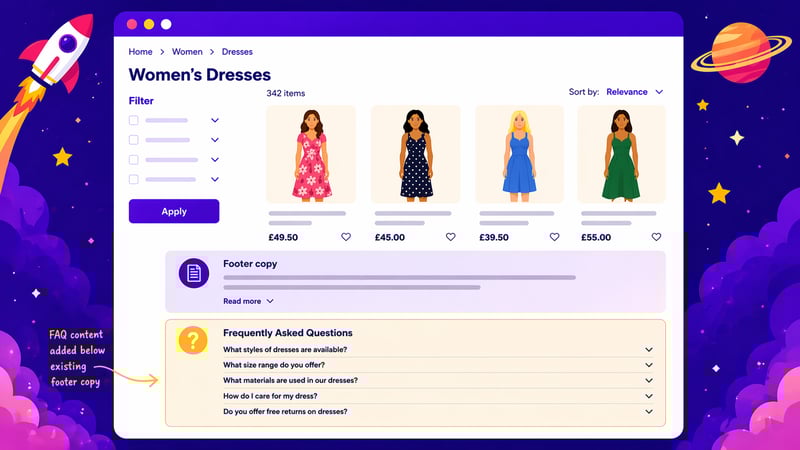
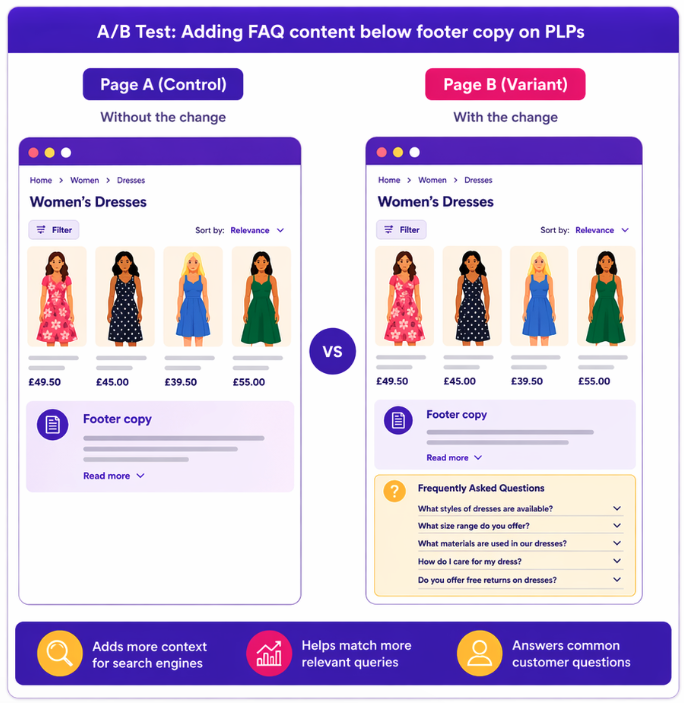
FAQ content was added directly below the existing footer copy on a selected set of PLPs. These FAQs were designed to address common category-level questions and provide additional context about the products featured on the page.
No other elements of the page were changed. Product grids, filters, internal linking, and existing footer copy remained exactly the same, allowing the test to isolate the impact of the additional FAQ content.
Results
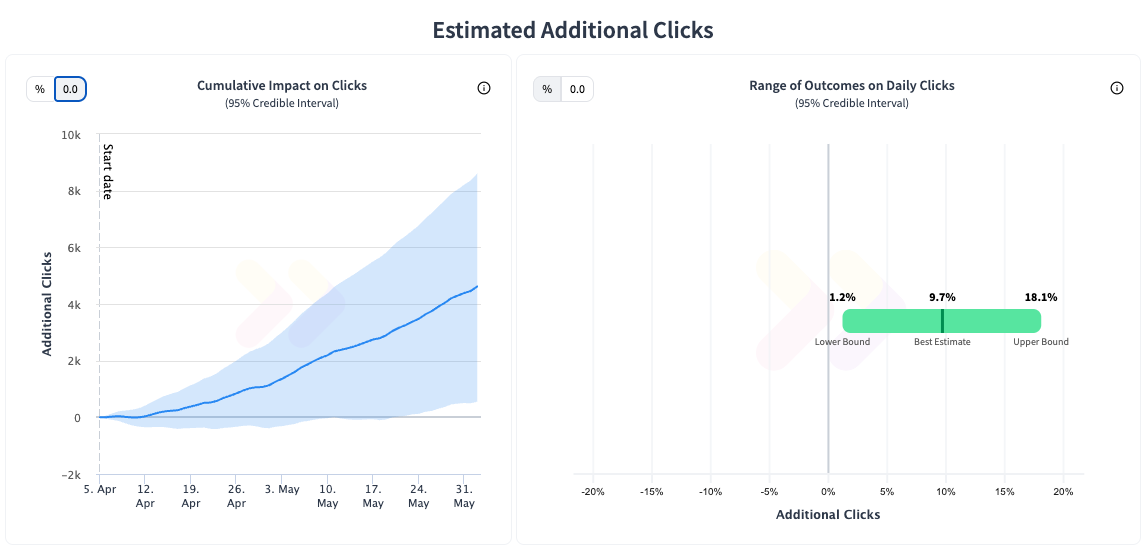
The test delivered a positive result at the 95% credible interval, with an estimated +9.7% increase in organic clicks.
The results reinforce a consistent theme seen across many SEO experiments: increasing relevant, query-aligned content on a page can improve how search engines understand and rank it.
In this case, adding FAQ content appears to have expanded the topical depth of PLPs, helping them match against a broader set of long-tail and informational queries. The structured, question-based format may also have made it easier for search engines to interpret the content and connect it to user intent.
As always, results will vary depending on context. The effectiveness of FAQ content depends heavily on how well it aligns with real user queries and the existing level of content on the page. However, this test demonstrates that even relatively simple, scalable content additions can drive meaningful improvements in organic performance when applied thoughtfully.
To receive more insights from our testing, sign up for our case study mailing list, and please feel free to get in touch if you want to learn more about this test or our split testing platform more generally.