At SearchPilot, we’re used to finding unexpected results from SEO testing. That’s why we recommend testing SEO changes in the first place, so that our customers can understand the full impact on their sites before they make big decisions. But the results of this test were so surprising that we had to dig deeper.
It’s no secret that capitalizing title tag content can boost organic traffic. We proved that in a case study back in 2024, showed that capitalizing only certain appealing CTAs also works in 2024, and found similar results on mobile traffic in 2025. When one of our ecommerce customers brought up wanting to run a test with the same concept, we thought it was obviously worth testing.
The Case Study
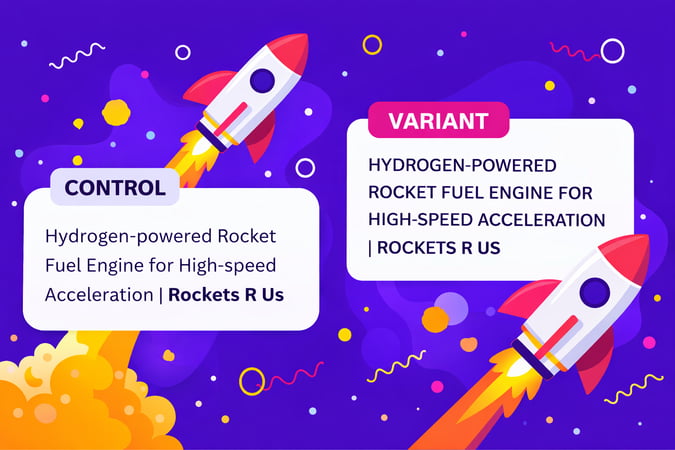
In this version of the test, the entire contents of the title tags were capitalized, including the customer’s piped brand.
.png?width=1536&height=1024&name=ChatGPT%20Image%20Mar%2019%2c%202026%2c%2001_56_11%20PM%20(1).png)
The Results
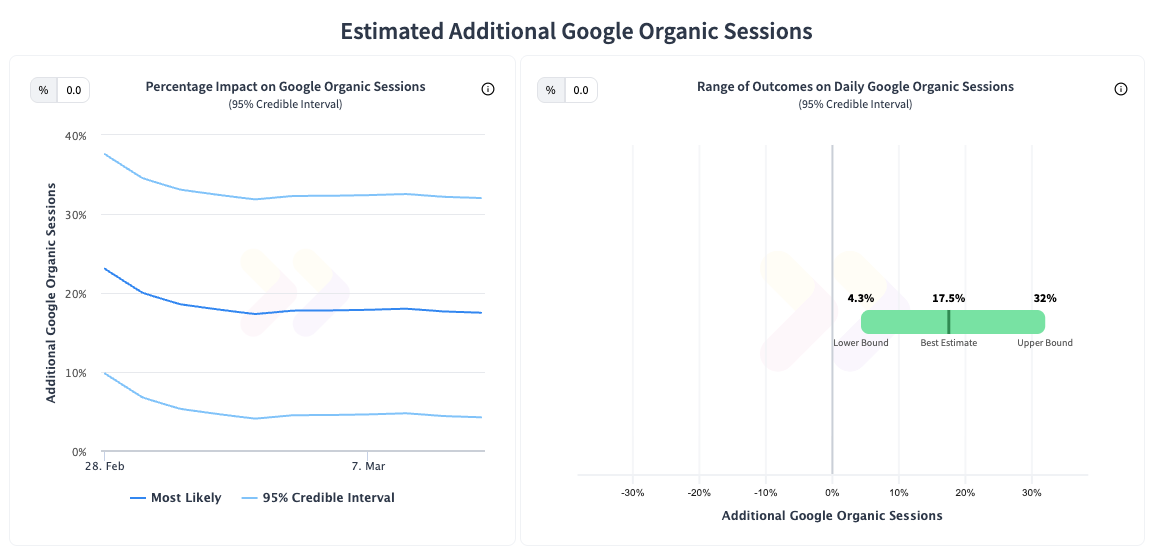
The results of this test showed an astonishing 17.5% uplift in traffic. This impact was mostly due to mobile traffic, where we saw a 20.4% uplift, while the impact on desktop traffic was inconclusive (possibly because desktop traffic in our testing section was much lower overall).
But here’s the strange part: When we ran spot checks on live search results pages, we couldn’t find any instances of the title tags appearing in all caps. We decided to do a deeper dive with a search results scraper, comparing the results for top keywords in our control and variant buckets. We found almost no instances of our all-caps title tags actually appearing in a way that users would see the capitalization in search results.
Furthermore, this ecommerce customer’s PDPs mostly appear in search results not in the 10 blue links, but in Product Grid shopping features. We couldn’t find instances of those product titles appearing in all caps either.
In past tests, we’d theorized that the positive results we’d seen from entirely or partially capitalized title tag content were due to an increased click-through rate. We thought that in increasingly crowded search results pages, those all-caps title tags were a viable way of standing out. But that couldn’t be the case for our customer, who was seeing a clear organic traffic improvement even though there’s no way most users could ever have seen those all-caps page titles in search results. So what was actually going on?
Our Investigation
We dug deeper into our customer data, looking at the outcomes of all tests involving content capitalization. The results surprised us. Across all of our customers, 45% of tests involving the capitalization of any element (usually H1s or title tags) were positive, and 0% were negative. In tests only involving partial or full capitalization of title tag content, 50% of tests were positive, and 0% were negative. That means that half of all tests involving capitalization of any part of title tag content we’ve ever run at SearchPilot have been positive, and we’ve never found any negative impact from this test type.
Those numbers make title tag capitalization tests our most consistent winning test type. But if we couldn’t prove that we were impacting the actual user experience on search results pages, how could we explain our results?
What We Discovered
To answer this question, we looked into what actually happens when Google indexes a page. When Google matches a page up with a user query, it converts that query into a string of lowercase characters that become lexical tokens. Indexing also turns a page’s entire HTML content into lexical tokens–but not in exactly the same way.
As Google indexes a page, it breaks down individual paragraphs, sentences, and phrases to understand what that page is about. This is a complex computing process called Natural Language Processing, and it’s been developed by training sophisticated algorithms on massive datasets of typed content.
Humans don’t type entirely in lowercase letters. We use capital letters to send important signals about the meaning of what we’re writing, and thanks to all of this training, Google can parse that meaning. That’s how it understands that apple and blackberry are possible ingredients in a fruit salad, while Apple and Blackberry create products that belong in your pocket, not your serving bowl. Capitalized words are part of Google’s process of Named Entity Recognition and Part of Speech recognition, where it breaks individual sentences down into their component parts to grasp their meaning and context.
But humans have another use for capitalization: EMPHASIS. Printed text has been using capitalization at the start of words for emphasis since the 1600s, with all-caps used to signify emphatic shouting starting in the 1850s and becoming a part of internet culture through Usenet from the 1980s onwards. That means that natural language processing systems trained on human-generated text are working with a massive amount of material in which capitalization is a strong signal about what’s most important.
With this in mind, we believe that the results we’re seeing in title tag capitalization tests cannot be fully attributed to click-through rates. We think that our winning title tag tests could actually be a demonstration of a fundamental building block of Google’s ability to understand the content it has indexed. By putting some or all of our title tag content in all-caps, we’re sending a signal to Google that this content is really important. So even if capitalization by itself isn’t something we can prove is a direct ranking factor, unusual capitalization choices can become a signal that Google will consider as it determines how a page should rank for user queries.
What This Means for SEO
So, does this mean you should immediately switch your title tags over to all-caps? Not exactly.
You may find that selective capitalization changes how much emphasis Google thinks you’re placing on each word. It may be the case that entirely capitalized title tags send a less clear signal than strategic use of capitalization. We’ll need a lot more iterative testing to isolate the exact impact of capitalization in Google’s assessment of meta and page content.
If you’re interested in seeing how these changes perform on your site, we recommend A/B testing your changes to prove you’re getting the best possible results.
To receive more insights from our testing, sign up for our case study mailing list, and please feel free to get in touch if you want to learn more about this test or our split testing platform more generally.