The Case Study
Image alt text is one of those on-page elements that SEOs have debated for years. It is widely recommended as a best practice, both by Google and for accessibility reasons, but whether it actually measurably influences organic rankings is less clear. On listing and category pages, where dozens of images are often served with generic or empty alt attributes, there is a reasonable case that making alt text more descriptive could help search engines better understand what the page is about.
The question at hand was whether combining the individual listing name with the page category in the alt text would provide Google with a more informative signal compared to a generic description. The hypothesis was that using more precise, query-aligned alt text would enhance the ranking of these pages for relevant searches, especially for type and class-level queries.
What was changed
A customer of ours that serves classifieds listings updated the alt text on their listing images across their category pages. Each image was given alt text that combined the individual listing name with the page category heading, replacing previously generic or minimal descriptions. In contrast, the control pages kept the original alt text.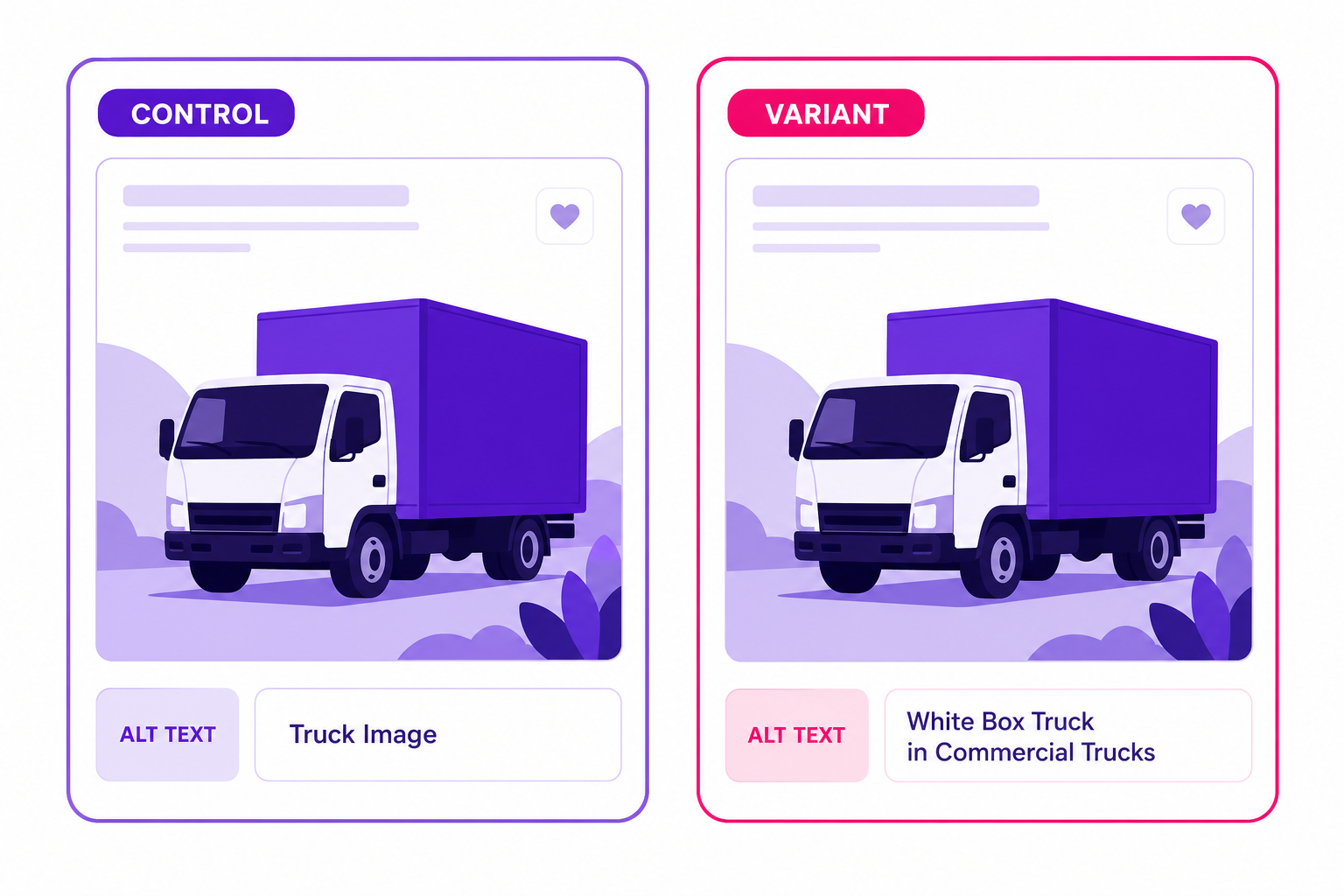
Results
The results of this test were inconclusive. We did not observe any statistically significant change in organic traffic in either direction. The best estimate indicated a 7.3% increase in organic sessions; however, the 95% credible interval ranged from -4.2% to +19.4%, which crosses zero. Additionally, the outcome was highly stable, suggesting that it is unlikely to become significant with more data.
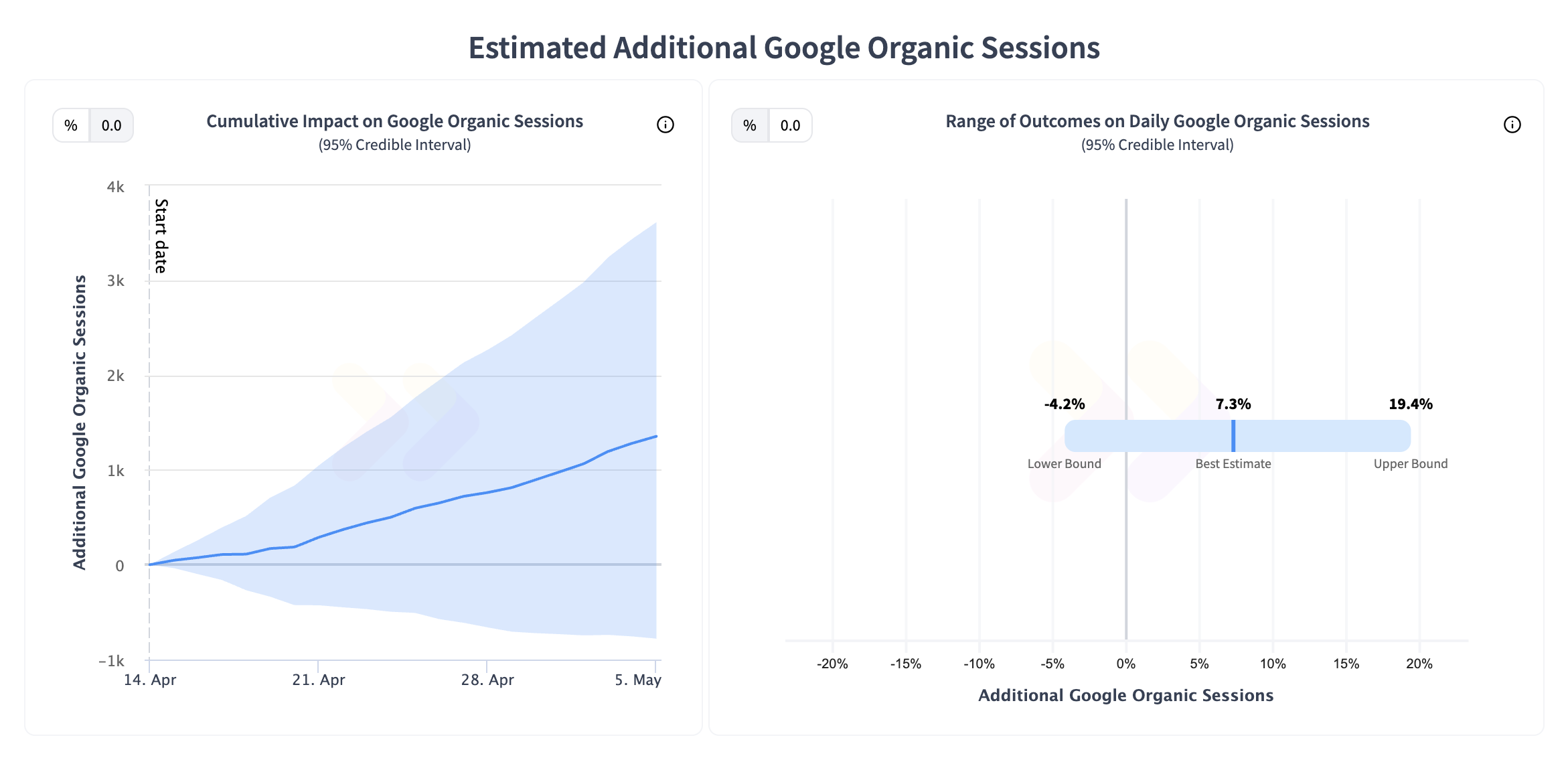
This is consistent with what we have seen in previous alt text tests, where adding keyword-rich alt text to images on category pages also produced no statistically significant change. The pattern suggests that while alt text may play a role in image search specifically, it does not appear to be a meaningful ranking signal for standard organic traffic on these page types.
As always, results will vary depending on the site and implementation. In this case, the customer proceeded with the change for accessibility reasons without concern that it would negatively affect organic performance.
To receive more insights from our testing, sign up for our case study mailing list.