The Case Study
Listing pages are a staple for travel sites and are often the starting point for travelers looking to explore.
AI-generated content is becoming increasingly common across the web, and the travel space is no exception. Customers are already producing destination copy at scale using AI tools, and we're starting to see more tests in which this content is used to fill gaps on pages that previously had very little.
For one travel customer, these pages contained little unique content. And the content they did have relied on JavaScript rendering. The thought process was straightforward: if we added more descriptive content for each destination, search engines might be better able to match these pages to the searches they should be showing up for, as well as a freshness component. The customer had already generated this content, so the question was really whether deploying it would move the needle.
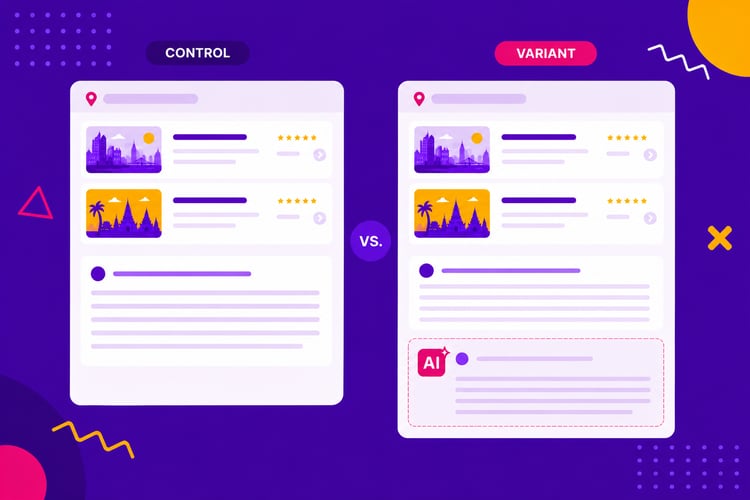
So we tested adding AI-generated content to these listing pages, rendering both client-side and server-side, so it would be in the HTML regardless of how the page was crawled.
What was changed
The injected content was rendered both client-side and server-side, meaning it was present in the HTML regardless of how the page was accessed.
Results
Adding this content had a significantly positive impact, with an estimated 18% increase in organic sessions! 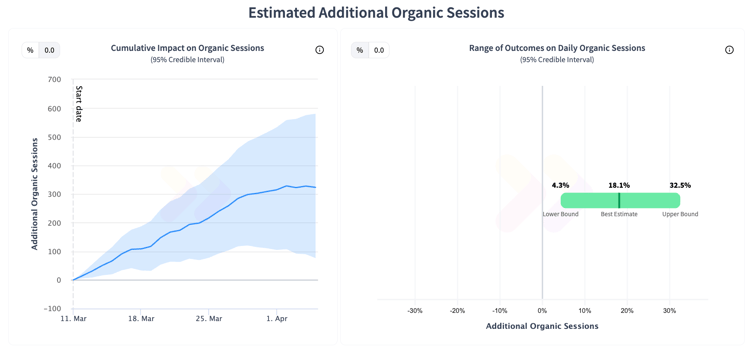
These pages didn't have much for search engines to latch onto before, so they probably weren't showing up for many of the relevant long-tail searches they could have been. Adding content gave search engines more signal about what the pages covered — and that seems to have translated into broader visibility.
It's also worth noting that serving the content on the server side likely mattered here. Getting content into HTML directly, rather than relying on JavaScript to render it, removes a potential barrier to search engines indexing it.
The takeaway is fairly general: adding relevant and/or unique content, even with AI, can open up a much wider range of possibilities for pages that were previously flying under the radar.
As always, results will vary by site. Your listing pages might already have strong content coverage, or the competitive landscape might be totally different. That's why testing is so valuable — it tells you what actually works for your specific setup rather than what worked somewhere else.
To receive more insights from our testing, sign up for our case study mailing list.