For travel sites, many searches include a place, and those places are often not just cities but specific landmarks and attractions, such as a theme park or a famous museum. This raises a question for any site with many individual location detail pages.
If a location has a well-known attraction, does saying so in the title help?
What We A/B Tested
Title tags are one of the clearest signals search engines use to decide which queries a page should rank for. They are also the first thing a searcher reads in the results, so they can affect click-through rate as well as rankings.
We decided to test this exact change on one of our travel industry customers, as we believed that appending a "near [Landmark/Attraction]" phrase would help pages rank better for the keywords they already target, help them rank for additional location-based keywords, and make the listing more appealing to people scanning the results page.
It may also give Google a clear, relevant location term for each page, which could help it show up for searches such as destinations near a stadium or theme park and entice searchers to click through.
What we changed
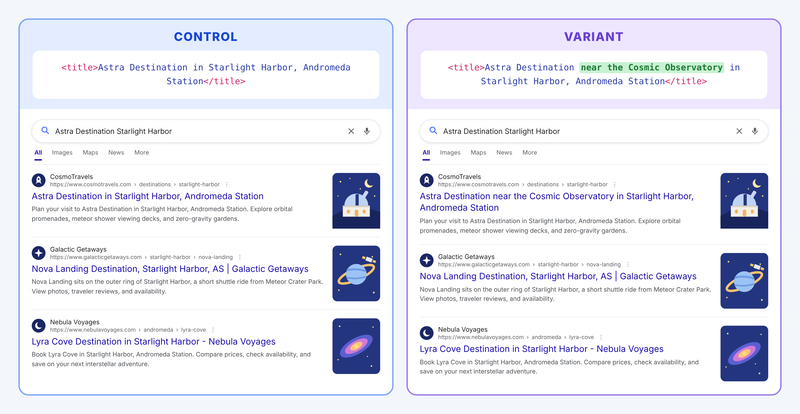
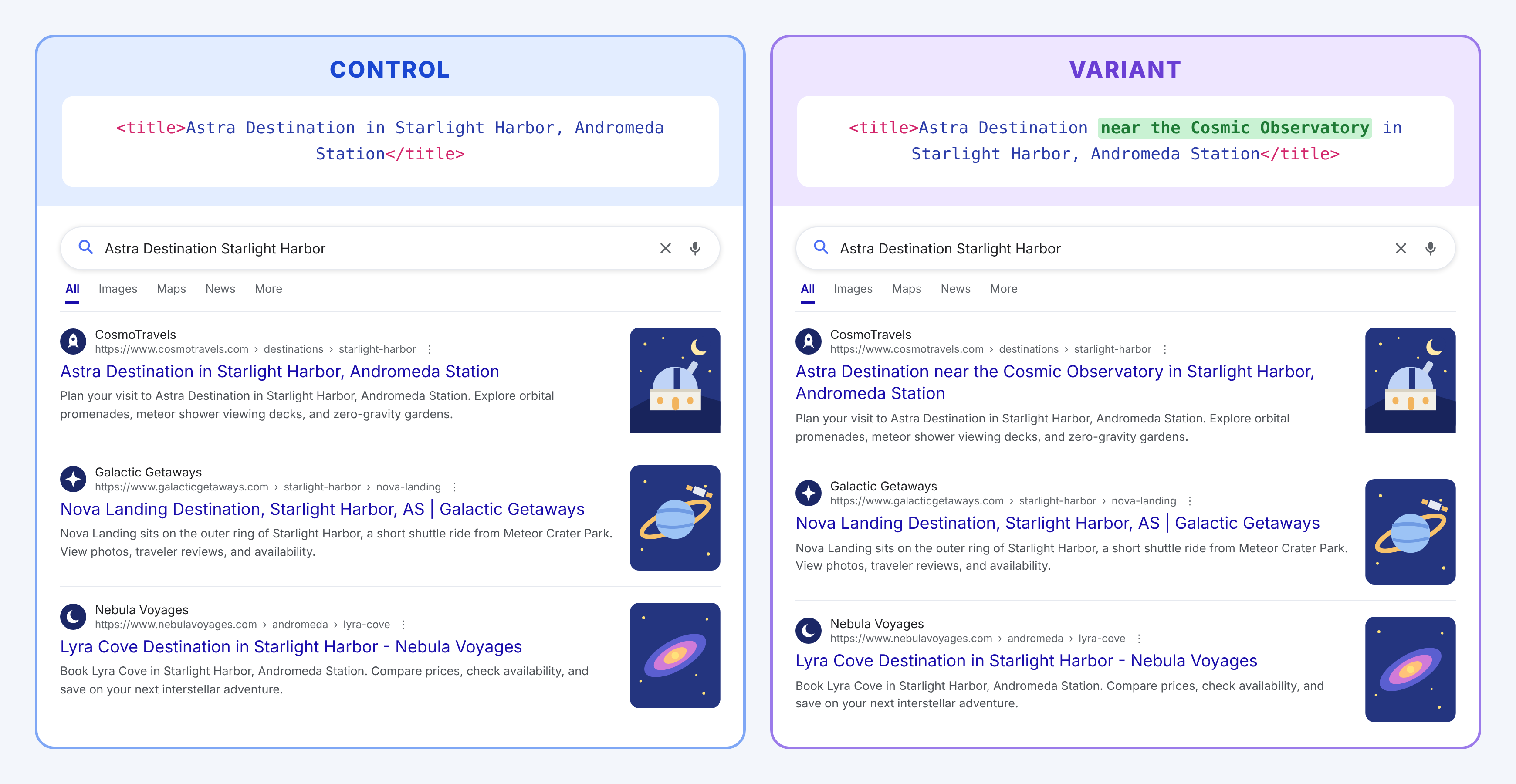
We appended "near [Landmark/Attraction]" to the title tags of their individual destination detail pages.
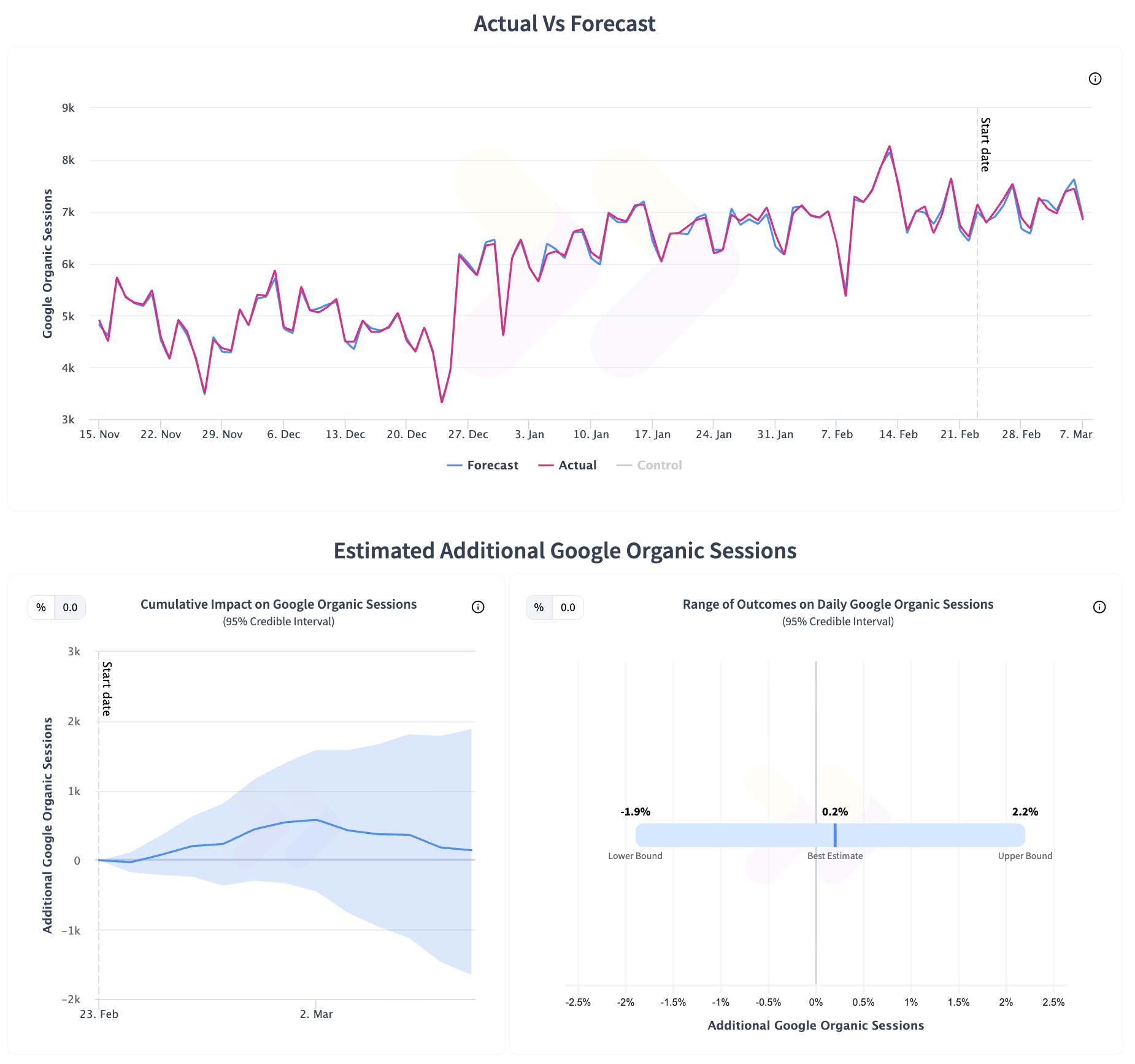
The result saw no detectable impact on organic traffic. Google organic sessions to the variant pages finished 0.2% above forecast. Still, that gap fell within normal variation, so the test does not show the change helped or hurt overall organic traffic.
What does this mean for SEO?
A flat overall result suggests that the extra landmark text did not change rankings or click-through rate enough to move total organic traffic. Several reasons could explain this. Google already has a lot of information about where each page sits, including the address, map data, page content, and the links pointing to it, so a landmark in the title may add little that Google didn't already know.
Title length is another factor. Adding words to a title pushes the existing keywords, such as the property name and city, further along the line, and longer titles are more likely to be truncated in the results. Google also rewrites titles when it thinks they do not match a query, so some variant titles may have been shown without the new text. In either case, searchers would have seen little difference.
Searches that mention a landmark are also competitive, and maps, the local pack, and large travel aggregators serve them heavily. Pages in that space tend to rely more on location signals and reviews than on title wording. A landmark phrase may help a little for searches with a strong location intent, while a small loss on other searches could offset that in the total.
It is also worth remembering that each landmark query has fairly low volume on its own. Even if the variant pages started to rank for more of these terms, the extra traffic would be spread across many pages and take time to build. The test ran for around two weeks, which is a short window for Google to recrawl titles, update its index, and settle rankings. Nearby properties also share the same landmark, so their pages may compete with each other for the same phrase.
The takeaway is that adding a landmark to destination page titles is not a reliable SEO lever on its own. A more targeted approach, such as limiting it to properties within walking distance of major attractions, or supporting it with on-page content and internal links, may do more than a title change alone.
As always, results will vary by site, page type, and implementation. Because the overall result was inconclusive, there was no evidence to support rolling the change out sitewide.
To receive more insights from our testing, sign up for our case study mailing list, and please feel free to get in touch if you want to learn more about this test or our split testing platform more generally.