Are you missing opportunities to direct crawlers to some of the most valuable pages on your site? A simple internal link, hiding in plain sight on every product page, drove a +18% improvement in organic traffic to a valuable page type for one of our ecommerce customers. Here's what happened when we made one simple internal linking change to their product detail pages.
What We A/B Tested
On many e-commerce websites that sell products from various brands, a product detail page (PDP) features a small brand label situated near the title. It's one of the first signals a shopper uses to understand the product that they're considering purchasing. It's often also an overlooked internal linking opportunity. On many templates, this brand name appears as plain text rather than a link to the brand's product listing page (PLP).
One of our ecommerce customers had brand-level PLPs, but the brand mention on their PDPs appeared only as plain text, not as a link to the relevant PLP. That meant that their brand-level PLPs were relying on thinner, less consistent internal linking, such as mostly navigation and breadcrumbs, to pick up crawl attention and signal their importance in the site structure.
We believed that turning the brand label on PDPs into a link to the corresponding brand PLP would give search engines a stronger, more consistent signal about the relationship between individual products and their parent brand collection. That kind of signaling is crucial for helping the brand-level PLPs rank well for relevant user queries. It might also help users by giving them an obvious path to browse more of the same brand.
What we changed
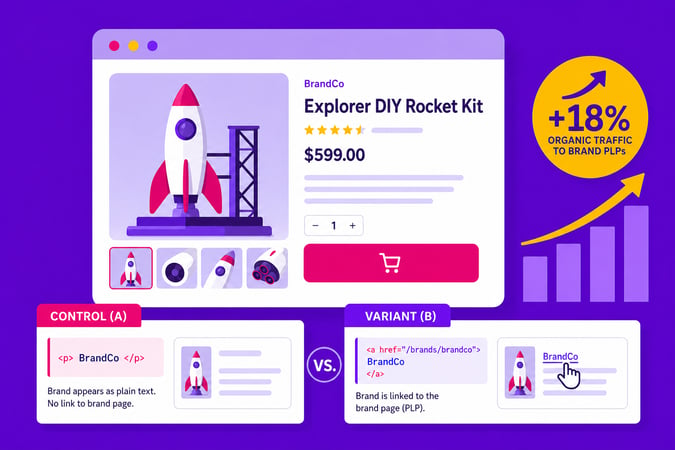
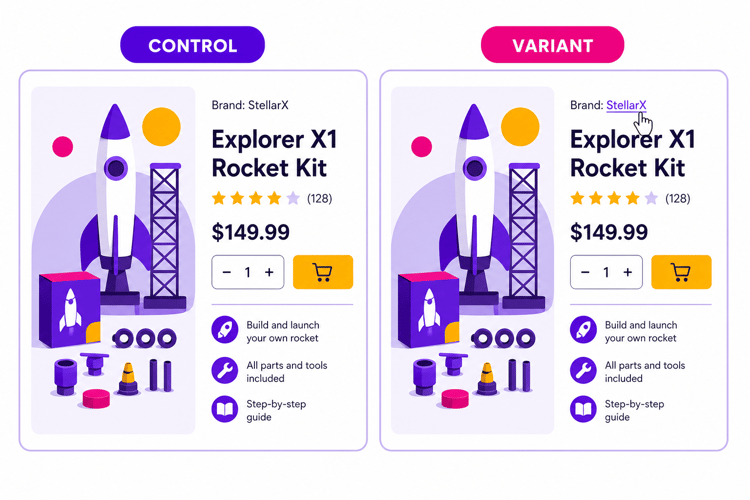
For our control test group, the brand name was in plain HTML <p></p> tags. Users might have expected to click the name element to reach the brand-level PLP, but there was no href link tag.
Our variant testing group added an anchor link pointing to the relevant brand-level PLP. This didn't change any visuals on the page, but it let both crawlers and users get to the PLP with one easy click.
At SearchPilot, when we conduct internal linking tests, we evaluate results across various page types. We started with the pages where we made the change, the PDPs: was there any risk that adding this link could dilute authority in a way that caused these PDPs to rank worse for relevant user queries?
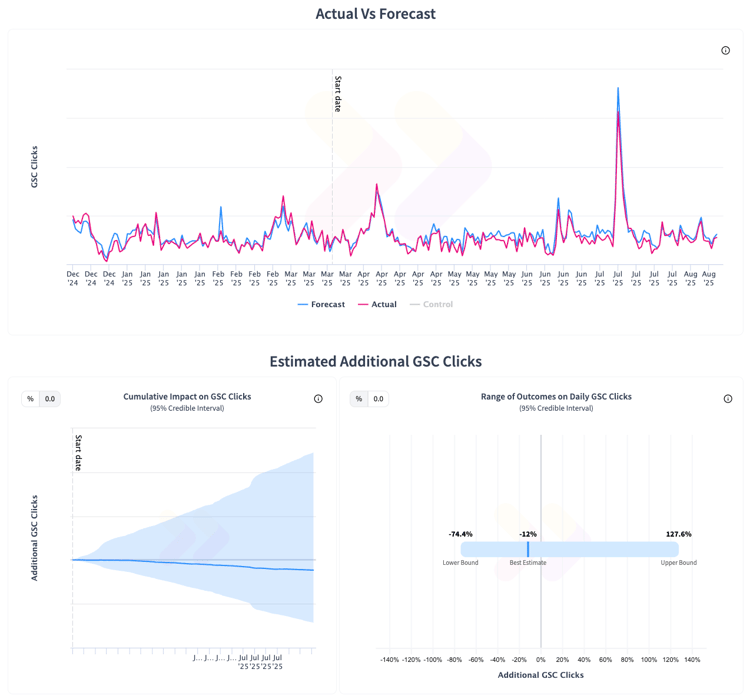
In this test, the inconclusive result was exactly what we hoped to see. Changing this element on PDPs did not negatively impact traffic, so it was safe to implement this change on these pages.
We also monitored the performance of the brand-level PLPs, as these pages were the ones we aimed to influence with new, highly relevant internal links. Here's what we found.
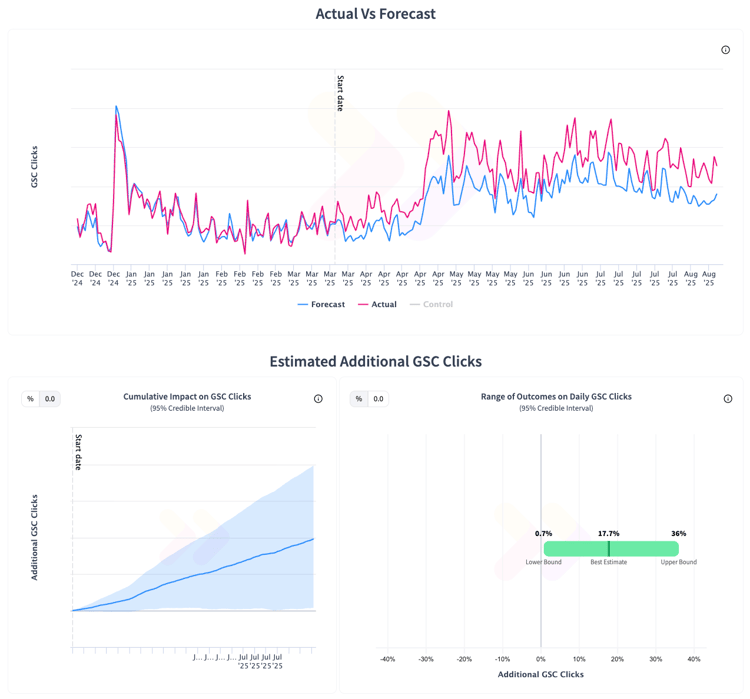
We saw a strong increase in organic traffic, with a predicted +18% uplift for our brand-level PLPs at a 95% credible interval. This drove a material lift in organic site traffic to those pages, all from one simple change that benefits crawlers and users navigating the site.
What did we learn?
The result lines up with a fairly intuitive story about link equity: these brand PLPs already had some internal linking support, but not a consistent, sitewide link from every relevant product page. Adding one gave search engines a clearer, more direct signal tying individual products back to their brand collection. We don't have data on whether brand pages with more incoming PDP links saw a bigger lift than those with just one or two, but the takeaway holds either way: link to your brand pages from every relevant PDP, regardless of how many products sit under that brand.
Even on a well-optimized site, a single consistent internal link was enough to generate a huge uplift to the brand-level PLPs. That tracks with everything we know about how crawlers move through a site, using the flow of internal links to understand how pages relate to each other and how those pages should rank for relevant queries. Don't rely on sitemaps or schema alone to signal the relationships between pages; look for natural, relevant opportunities to place internal links.
To receive more insights from our testing, sign up for our case study mailing list, and please feel free to get in touch if you want to learn more about this test or our split testing platform more generally.